Hospitality
Hotel Website Design
Fast, multilingual websites for boutique hotels and small properties, with booking built in. The infrastructure that brings the guest to you directly instead of through an OTA commission.
Why it matters
A hotel site is a sales channel, not a brochure
Three layers have to work at once:
What is included
What every hotel site I build has
All of the following is standard in every hotel project, whatever the size of the property.
Booking that converts
A direct booking form, a link into your booking engine, or OTA connections (Booking.com, Expedia). The flow is trimmed to three taps because every extra step on a phone is a lost reservation.
Multilingual SEO
English and Turkish as the base; Hungarian, German, Russian, French or Arabic added for the markets you actually sell to. Each language gets its own metadata, hreflang and hand-written content, not a translation plug-in.
Hotel schema and reviews
Hotel, LodgingBusiness, HotelRoom and AggregateRating markup so Google can show your stars, review count, price range and room types in the result itself. Done conservatively, so it never costs you rich results later.
Location and transfers
An interactive map, walking distances to the landmarks, an airport transfer request form and how-to-get-here pages. The guest's first question is answered before they ever email you.
Local guide content
Guides to the sights, restaurants and events around the hotel, in every language the site speaks. Guests get real value, and the hotel ranks for long-tail searches like what to see near Sultanahmet in Hungarian.
Email automation
Booking confirmations, transfer reminders and pre-arrival information sent automatically through a modern transactional service such as Resend. Clear communication with no staff time spent on it.
Case study
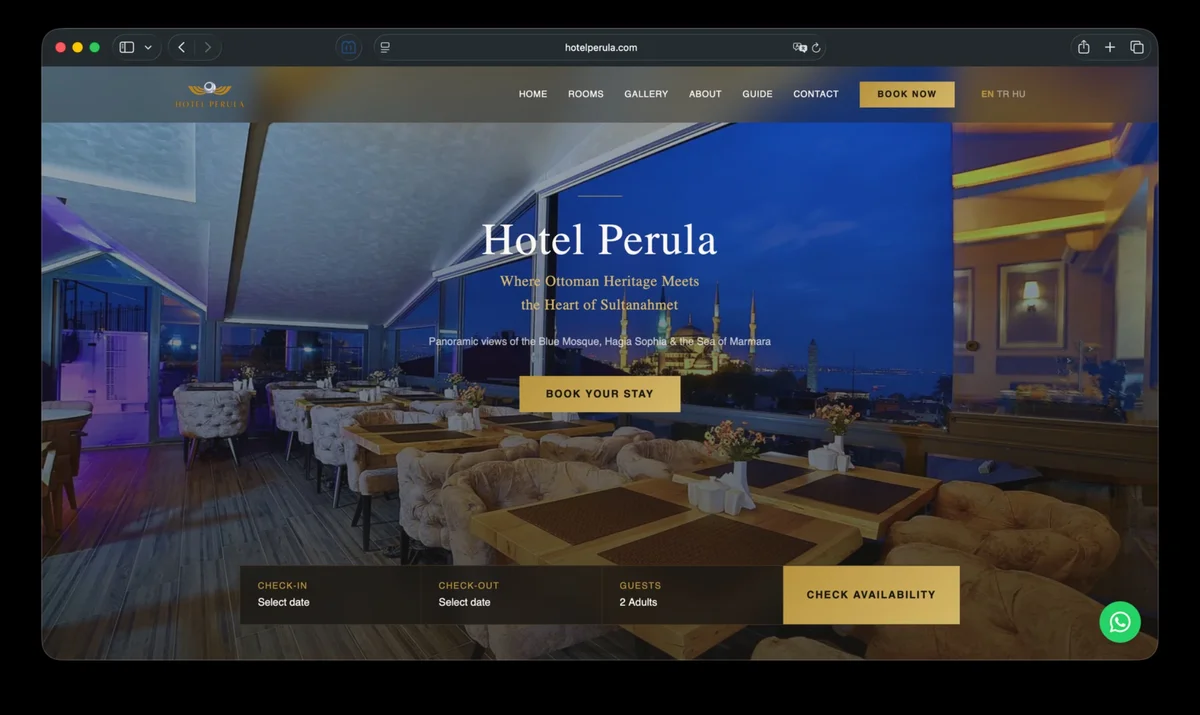
Hotel Perula, a boutique hotel in Sultanahmet
A boutique hotel a hundred metres from the Blue Mosque, with two goals: more direct bookings and a foothold in the Hungarian market. The old site was dated and the hotel depended almost entirely on the OTAs.
What was built: a trilingual site (TR/EN/HU), a guide blog aimed at Hungarian travellers, a direct booking flow, an airport transfer request form, the markup that puts the hotel's stars in Google, automated confirmation and reminder emails, and a sub-second load time.
Results over the last three months: about 530 organic clicks and 34,000 impressions from Google, with impressions growing every month (roughly 7,700 in April to 23,500 in May). The Hungarian-first content strategy worked: Hungary is the second country by clicks after Turkey, and the site sits on page one for Hungarian searches about Topkapı, Hagia Sophia and Sultanahmet. Guests meet the hotel while planning the trip, before they have heard its name.
Today the property shows its stars and review count in Google, runs an active direct-booking channel, and stands out in Sultanahmet with more than 500 Google reviews.
Pricing
What decides the price
There is no fixed list price for a hotel site. These are the items that move it.
Pricing factors
- Number of rooms and room types (a 5-room boutique hotel is not a 100-room property)
- Number of languages (one, two, or several — EN/TR/HU/DE/RU and so on)
- Booking integration level (simple form, OTA links, or your own booking engine)
- Photography (do professional photos exist, or is a shoot needed)
- Guide and blog content (local guides, events calendar, per language)
- Email automation (confirmations, transfer requests, newsletter)
- Multi-currency display and dynamic pricing support
- Maintenance and content-update retainer after launch
Clear quote
Thirty-minute brief, written quote
Tell me your rooms, your markets and how you take bookings today. You get a detailed quote the same day.
Process
From brief to launch in five steps
You know what is happening at each stage, how long it takes and what I need from you.
Brief and target markets
Room structure, price segment, the markets you sell to, current booking channels, competitors and the material you already have.
Design
A visual identity that matches the atmosphere of the property, room-type pages and gallery structure. Premium feel without paying for it in load time.
Build and integrations
Next.js and Tailwind, the multilingual architecture, booking form or engine link, schema markup and email automation. Typically 10 to 14 working days.
Content and SEO
Your translations go in, guide content is structured per language, the Google Business Profile is connected and technical SEO is completed.
Launch and handover
You are shown how to read the booking-click dashboard, add guides and update room prices. The first 30 days of fixes are included.
Questions
About hotel websites
Why does a hotel website need a specialist?
+
Should I take bookings directly or through the OTAs?
+
Which languages should my hotel site have?
+
What does Hotel schema markup actually do?
+
How much does a hotel website cost?
+
“We are very happy with the work. The site is clean, fast and mobile friendly. Everything that was promised was delivered exactly as Efe said it would be. Our previous website was very old; it has been rebuilt in a modern, beautiful way.”
A site that fits your hotel is a thirty-minute brief away.
Boutique hotel or mid-size property: multilingual, ranking, and bringing bookings straight to you. Send the form and I will call you back.